
Many people find the Brontës through Charlotte Brontë’s sublime novel Jane Eyre. It’s a book that’s very readable, very entertaining, but it has a lot to say as well. It’s also one that we’ve studied from several angles in this blog over the years. We’ve looked at themes of love and marriage in Jane Eyre, we’ve looked at television adaptations of Jane Eyre, and we’ve looked at the inspiration for the character of St. John Rivers in Jane Eyre, among other things.
Tomorrow marks the 178th anniversary of the day Charlotte received her six author copies of her first published novel. A very proud day for Charlotte, especially as her previous novel The Professor had been rejected by every publisher it had been sent to. In today’s blog post we’re going to look at accounts of the genesis of this great novel Jane Eyre.
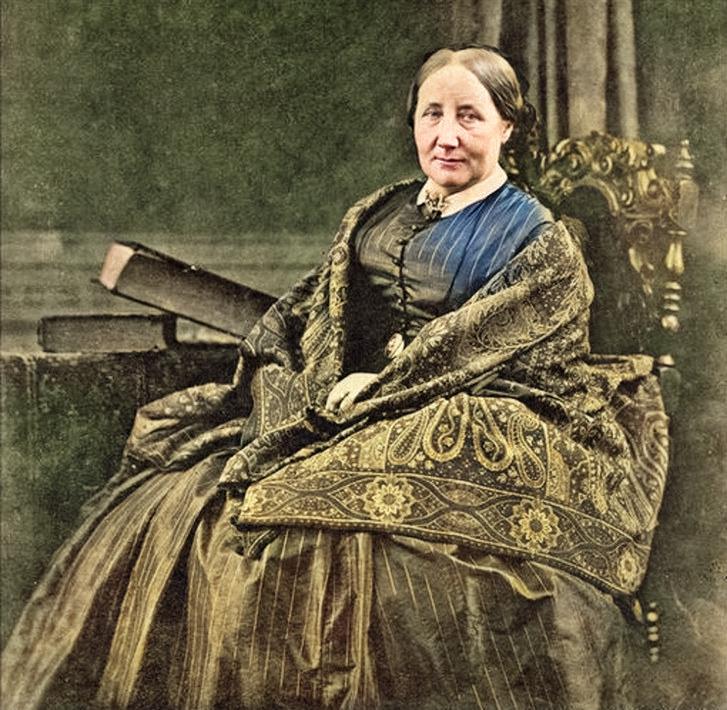
Writing in a time of darkness, by Elizabeth Gaskell
‘The three tales [Agnes Grey, Wuthering Heights and The Professor] had tried their fate in vain together, at length they were sent forth separately, and for many months with still-continued ill success. I have mentioned this here, because, among the dispiriting circumstances connected with her anxious visit to Manchester, Charlotte told me that her tale came back upon her hands, curtly rejected by some publisher, on the very day when her father was to submit to his operation. But she had the heart of Robert Bruce within her, and failure upon failure daunted her no more than him. Not only did The Professor return again to try his chance among the London publishers, but she began, in this time of care and depressing inquietude, in those grey, weary, uniform streets; where all faces, save that of her kind doctor, were strange and untouched with sunlight to her, – there and then, did the brave genius begin Jane Eyre.’
Ill success failed to crush us, by Charlotte Brontë
‘Ill-success failed to crush us: the mere effort to succeed had given a wonderful zest to existence; it must be pursued. We each set to work on a prose tale: Ellis Bell produced ‘Wuthering Heights,’ Acton Bell ‘Agnes Grey,’ and Currer Bell also wrote a narrative in one volume. These MSS. were perseveringly obtruded upon various publishers for the space of a year and a half; usually, their fate was an ignominious and abrupt dismissal.
At last ‘Wuthering Heights’ and ‘Agnes Grey’ were accepted on terms somewhat impoverishing to the two authors; Currer Bell’s book found acceptance nowhere, nor any acknowledgment of merit, so that something like the chill of despair began to invade her heart. As a forlorn hope, she tried one publishing house more – Messrs. Smith, Elder and Co. Ere long, in a much shorter space than that on which experience had taught her to calculate—there came a letter, which she opened in the dreary expectation of finding two hard, hopeless lines, intimating that Messrs. Smith, Elder and Co. ‘were not disposed to publish the MS.,’ and, instead, she took out of the envelope a letter of two pages. She read it trembling. It declined, indeed, to publish that tale, for business reasons, but it discussed its merits and demerits so courteously, so considerately, in a spirit so rational, with a discrimination so enlightened, that this very refusal cheered the author better than a vulgarly expressed acceptance would have done. It was added, that a work in three volumes would meet with careful attention.
I was then just completing ‘Jane Eyre,’ at which I had been working while the one-volume tale was plodding its weary round in London: in three weeks I sent it off; friendly and skilful hands took it in. This was in the commencement of September, 1847; it came out before the close of October following, while ‘Wuthering Heights’ and ‘Agnes Grey,’ my sisters’ works, which had already been in the press for months, still lingered under a different management.’
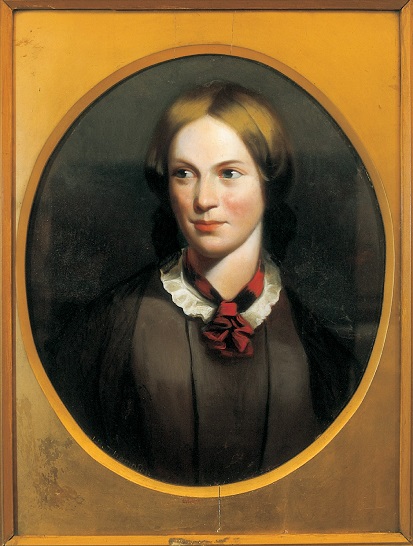
The astonished publisher, by George Smith
‘In reply to Mr. Williams’s letter came a brief note from Currer Bell, expressing grateful appreciation of the attention which had been given to the MS., and saying that the author was on the point of finishing another book, which would be sent to us as soon as completed.
The second MS. was ‘ Jane Eyre. Here again Currer Bell’s suspicion as to the excessive parsimony of London publishers in regard to postage-stamps found expression in the letter accompanying the MS. She wrote :
“I find I cannot prepay the carriage of the parcel, as money for that purpose is not received at the small station where it is left. If, when you acknowledge the receipt of the MS., you would have the goodness to mention the amount charged on delivery, I will immediately transmit it in postage-stamps.”
The MS. of Jane Eyre was read by Mr. Williams in due course. He brought it to me on a Saturday, and said that he would like me to read it. There were no Saturday half-holidays in those days, and, as was usual, I did not reach home until late. I had made an appointment with a friend for Sunday morning; I was to meet him about twelve o’clock, at a place some two or three miles from our house, and ride with him into the country.
After breakfast on Sunday morning I took the MS. of Jane Eyre to my little study, and began to read it. The story quickly took me captive. Before twelve o’clock my horse came to the door, but I could not put the book down. I scribbled two or three lines to my friend, saying I was very sorry that circumstances had arisen to prevent my meeting him, sent the note off by my groom, and went on reading the MS. Presently the servant came to tell me that luncheon was ready ; I asked him to bring me a sandwich and a glass of wine, and still went on with Jane Eyre. Dinner came ; for me the meal was a very hasty one, and before I went to bed that night I had finished reading the manuscript.
The next day we wrote to Currer Bell accepting the book for publication. I need say nothing about the success which the book achieved, and the speculations as to whether it was written by a man or a woman. For my own part I never had much doubt on the subject of the writer’s sex ; but then I had the advantage over the general public of having the handwriting of the author before me. There were qualities of style, too, and turns of expression, which satisfied me that Currer Bell was a woman, an opinion in which Mr. Williams concurred. We were bound, however, to respect the writer’s anonymity, and our letters continued to be addressed to Currer Bell, Esq.”

So there we have three accounts of the genesis of the novel. How Charlotte was not crushed by the failure of The Professor to find a publisher, but instead commenced work on Jane Eyre whilst caring for her father after his eye operation; it was read in a day by the publisher George Smith, and the following day a letter was sent to Charlotte accepting it for publication. Literary history was made.
On 19th October 1848, six copies of Jane Eyre by Currer Bell duly arrived at Haworth Parsonage, and when other copies entered the public realm it, and its author, became an overnight success. Here is Charlotte’s account of receiving the books:

Readers today love the novel just as much as readers in the nineteenth century, so thank you Charlotte Brontë and thanks to George Smith and to W. S. Williams for recognising its genius. I hope to see you next Sunday for another new Brontë blog post.
Thank you. Exciting reading.
NIck, thank you for all your weekly blogs which I enjoy and look forward to reading. This week particularly struck me and was very well composed. I could not agree more with your closing paragraph about our need to thank Smith Elder & Co (principally George Smith and William Smith Williams). If not for these gentlemen the Brontë novels may (or definitely) never have reached their place at the pinnacle of English Literature as they have today. I believe they should be recognised for their brave decision(s).
This sentiment struck a chord with me as 6 or more years ago and for a few years thereafter I tried to have a Blue Plaque erected at Cornhill in the Square Mile where their offices were located. However bureaucracy and cost defeated me. If you ever think of trying for this, and you may have more influence than me, then I would definitely support you in such an endeavour.
Thank you so much Geoff, it’s a cause I fully support, so thank you for your endeavours.
I’m reading Jane Eyre for the hundredth time, and each time I discover new meanings, new depths, and new insights into her mind and her take on human nature. The more things change, the more they stay the same, and that about sums it up.