
There was a distinct chill in the air as I took Matisse for a walk this morning (that’s Matisse the Jack Russell Terrier, not Matisse the artist). The streets are strewn with fallen leaves, and it won’t be long until the annual dilemma about whether it’s too early to switch the heating on ensues. Tomorrow marks the first official day of Autumn, but it certainly seems to be here already in the heart of Yorkshire. Autumn, or Fall as it’s known across the pond, is a time for pullovers and steaming cups of something warm, a time for snuggling up and hunkering down, and it’s also a time for poetry.
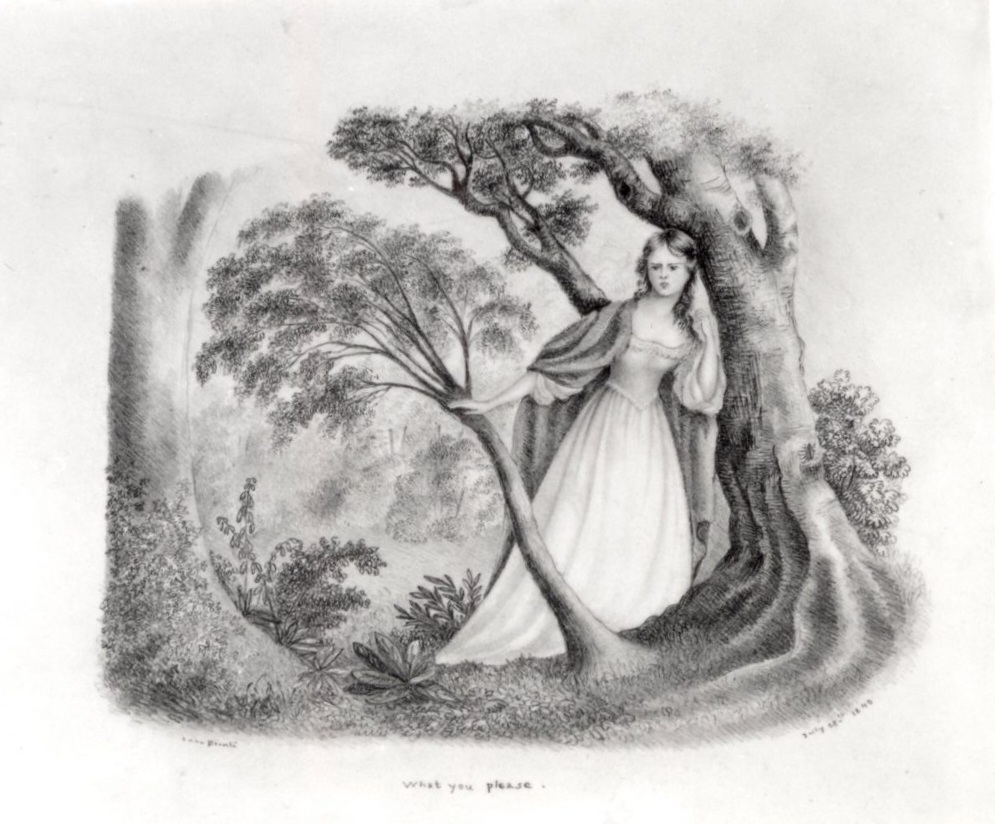
In today’s post we’re going to look at three very timely odes to Autumn and autumnal weather. Let’s begin with a very evocative poem by Anne Brontë, composed when she was a governess at Thorp Green Hall:
Lines Composed In A Wood On A Windy Day
‘My soul is awakened, my spirit is soaring
And carried aloft on the wings of the breeze;
For above and around me the wild wind is roaring,
Arousing to rapture the earth and the seas.
The long withered grass in the sunshine is glancing,
The bare trees are tossing their branches on high;
The dead leaves beneath them are merrily dancing,
The white clouds are scudding across the blue sky.
I wish I could see how the ocean is lashing
The foam of its billows to whirlwinds of spray;
I wish I could see how its proud waves are dashing,
And hear the wild roar of their thunder to-day!’
Next we turn to Emily Brontë, always a fine poet and a fine and keen observer of nature:
Fall, Leaves, Fall
‘Fall, leaves, fall; die, flowers, away;
Lengthen night and shorten day;
Every leaf speaks bliss to me
Fluttering from the autumn tree.
I shall smile when wreaths of snow
Blossom where the rose should grow;
I shall sing when night’s decay
Ushers in a drearier day.’
Finally we come to perhaps the most famous Autumn verse of them all, so I hope you will excuse the fact that it isn’t written by a Brontë. The Brontë sisters never met John Keats. He died, aged only 25, just a year after the birth of Anne Brontë, from a condition those Haworth siblings came to know all too well: tuberculosis. No, the Brontës never met Keats, but Charlotte and Anne did meet the daughter of his great friend and publisher Leigh Hunt during their 1849 journey to London. Charlotte Brontë wrote of this in a letter she sent to her friend Mary Taylor after she and Anne returned to Haworth:
‘On Monday we went to the Exhibition of the Royal Academy and the National Gallery, dined again at Mr. Smith’s, then went home with Mr. Williams to tea and saw his comparatively humble but neat residence and his fine family of eight children. A daughter of Leigh Hunt’s was there. She sang some little Italian airs which she had picked up among the peasantry in Tuscany, in a manner that charmed me.’

Let us finish this post with Keat’s great ode ‘To Autumn’, written on 19th September 1819. I hope you can join me next week, whatever the weather is like, for another new Brontë blog post:
To Autumn
‘Season of mists and mellow fruitfulness,
Close bosom-friend of the maturing sun;
Conspiring with him how to load and bless
With fruit the vines that round the thatch-eves run;
To bend with apples the moss’d cottage-trees,
And fill all fruit with ripeness to the core;
To swell the gourd, and plump the hazel shells
With a sweet kernel; to set budding more,
And still more, later flowers for the bees,
Until they think warm days will never cease,
For summer has o’er-brimm’d their clammy cells.
Who hath not seen thee oft amid thy store?
Sometimes whoever seeks abroad may find
Thee sitting careless on a granary floor,
Thy hair soft-lifted by the winnowing wind;
Or on a half-reap’d furrow sound asleep,
Drows’d with the fume of poppies, while thy hook
Spares the next swath and all its twined flowers:
And sometimes like a gleaner thou dost keep
Steady thy laden head across a brook;
Or by a cyder-press, with patient look,
Thou watchest the last oozings hours by hours.
Where are the songs of spring? Ay, Where are they?
Think not of them, thou hast thy music too, –
While barred clouds bloom the soft-dying day,
And touch the stubble-plains with rosy hue;
Then in a wailful choir the small gnats mourn
Among the river sallows, borne aloft
Or sinking as the light wind lives or dies;
And full-grown lambs loud bleat from hilly bourn;
Hedge-crickets sing; and now with treble soft
The red-breast whistles from a garden-croft;
And gathering swallows twitter in the skies.’